An executive coach for general managers who has held the GM seat, and the CEO seat it reports to.
I am an executive coach for general managers, business unit leaders and P&L owners: the first business you run end to end, the number you are now accountable for, the cross-functional team you used to sit on, and the CEO above you.
I was EVP and General Manager at New Relic, running the platform organization of 450 people in four countries as revenue went from $300M to $500M, with $50M-plus of new-product ARR and net revenue retention taken from 95% to 115% along the way. I took that seat after the CEO let the previous leader go. Before it I founded the company that became Web.com and took it to a Nasdaq IPO; after it I was COO of a VC-backed turnaround.
So I have been accountable for the number, and I have been the CEO the general manager reports to. I coach from both sides of that seat.
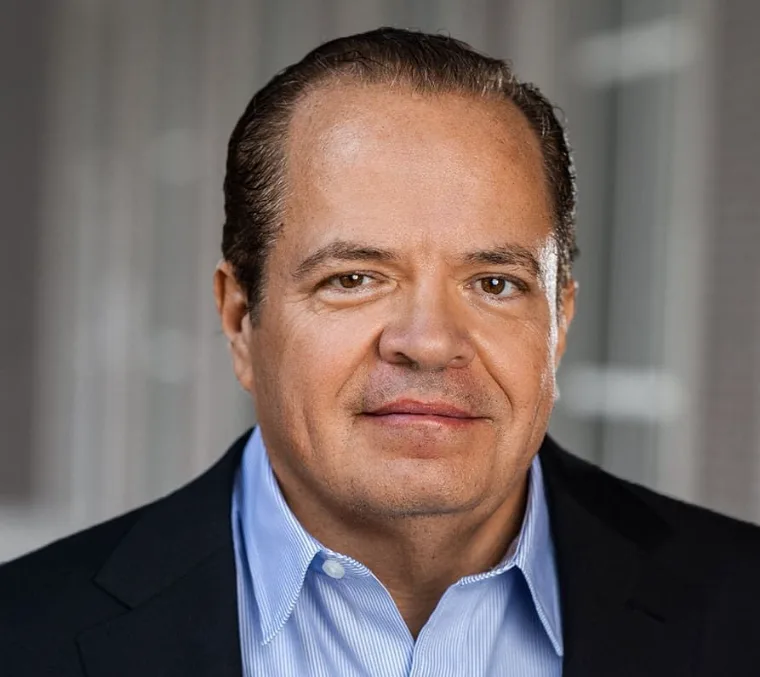
The general manager seat at New Relic, from the inside.
I came into New Relic as EVP and General Manager of the platform organization after the CEO let the previous leader go. The largest customers were telling us there had been no real innovation in nearly three years, sales had stopped believing product and engineering could deliver, and the accounts were looking at competitors. That is the GM seat at its most honest: a $300M business, 450 people across four countries, and a number that was mine the day I walked in.
Three moves did most of the work, and I wrote them up in aligning product and engineering for performance: one general manager holding product and engineering to the same business metrics, so the finger-pointing stopped; a quarterly plan that set a fixed share of engineering for the roadmap, for bugs and for what sales had sold; and a cross-company escalation meeting where any change to the roadmap had to be agreed by the leaders of the company, so trade-offs were made in the open instead of under the hood.
At the next customer advisory board the CTO of Disney and an SVP at Capital One told us we had delivered more of what they wanted in six months than in the previous three years. Revenue went from $300M to $500M, with $50M-plus of incremental ARR from the new products. Along the way I gave the global keynote at FutureStack, led the customer advisory boards, and presented to a board that included partners from Benchmark, Trinity Ventures and Madrona.
What it looked like from inside the organizations I ran.
“Ken led our $160M+ cloud, engineering, and DevOps modernization across a $3B+ portfolio. He brought clarity, velocity, and accountability to every initiative.”
“Ken is one of the most effective technology leaders I have worked with. He sees the whole business and what needs to be done at the broadest level.”
General managers and P&L leaders in their first business, or their next one.
General managers, business unit leaders, division presidents and country managers, at a startup, a mid-sized company or an enterprise corporation. Most were promoted from sales, operations, product or engineering into a first P&L role: a facility, a region, a product line or a business unit, with the revenue and the cost both yours for the first time. A first time general manager and a division president scaling the operation they already run sit in the same seat with different constraints. Last year you were the best in the building at one function. This year every function reports to you, and the work is a different job.
The situations general managers bring: a transition into the seat and the first 90 days in it; missed targets or a forecast you do not yet trust; team silos and an execution speed that has dropped; a strategic reset the CEO wants by the offsite; and a leadership team that used to be your peers.
Why the general manager seat is hard to learn on the job.
It is the seat the CEO seat is filled from. Of the 168 new S&P 1500 chief executives named in 2025, 48% came from the COO or president seat and another 30% were promoted divisional CEOs; 84% were first-time CEOs. Boards use the division and the P&L to train the next chief executive.1
Nobody arrives with the whole job. The move from leading a function to leading an enterprise means, for the first time, taking responsibility for a P&L and for executives across every function. The research on that move names seven shifts, from specialist to generalist and from problem solver to agenda setter, and finds that most rising stars trip on several of them.2
The number is the credential. When a search firm surveyed 2,300 senior women leaders, 70% held or had held a P&L, nearly 60% had taken one on within their first decade at work, and 47% of the CEOs among them said that going after P&L roles was what moved their career.3
Taking charge takes longer than anyone budgets for. The classic field study of 14 management successions, including a three-year study of four newly appointed division presidents at companies from $1.2 million to $3 billion in sales, found that taking charge runs through five predictable stages, taking hold, immersion, reshaping, consolidation and refinement, and that the manager's working relationship with the boss was one of the strongest predictors of whether the transition succeeded.4
The hard part is rarely the domain you came from. It is the functions you never ran, the trade-offs between them, the CEO who now judges you on a number, and the version of you the business needs next.
What coaching for a general manager works on.
The work is growing the general manager as fast as the business he or she now owns.
Owning the P&L for the first time
P&L ownership is reading the numbers, making the decisions they point to, and being accountable when they miss. We work on the forecast you can defend, the cost structure you inherited, the gross margin nobody explained to you, and the discipline of hitting the number quarter after quarter. I owned a $300M number that had to become $500M, and I have sat on the board side reading other people's.
The cross-functional team you used to sit on
A general manager balances sales, product, engineering, operations and finance, and used to be one of them. We work on the move from specialist to generalist: how to judge the functions you never ran, how to make the trade-offs between them and explain the rationale, and how to lead peers who wanted your seat. At New Relic I put product and engineering under one set of business metrics and the finger-pointing stopped.
The CEO above you and the number between you
Your CEO now judges you on a P&L, and the CEO relationship works or fails on decision rights: which calls are yours, which stay with the CEO, and how you disagree in private and align in public. I have been the CEO in that relationship and the GM in it, so the coaching keeps both sides in view.
Bridging strategy and execution
Translating the corporate plan, and the annual operating plan and budget you now own with finance, into a quarterly operating rhythm the unit can actually run: a plan with fixed shares of capacity, a cross-company meeting for any change to it, and one place where competing priorities get settled in the open. That is what team alignment means in practice. The three moves below are the version I ran; we adapt them to your business.
Decisions under pressure, with the blind spots named
A general manager decides with the data half in: the forecast, the hire, the price, the customer you cannot afford to lose. We work on which of those calls are reversible and which are not, on the speed of the ones that are, and on the two or three only you can make, in a room with no agenda and no stake in the result, where your blind spots get said out loud before the CEO says them.
Executive presence: customers, the board and the room
The GM is the face of the business to its biggest customers, to the board and to the rest of the company. I gave the global keynote at FutureStack, led customer advisory boards with Disney and Capital One in the room, and presented to the New Relic board. Presence is not performance; it is being the clearest person in a room that needs a decision.
From general manager to CEO
Nearly a third of new S&P 1500 CEOs in 2025 were promoted divisional CEOs, and boards treat the division as the training ground. If the CEO seat is where you are going, we build the P&L record, the board exposure and the enterprise judgment on purpose, inside the role you have, instead of waiting for a title.
Selling into SMB, mid-market and enterprise
The unit you now own sells to someone, and often to a segment you have never sold to yourself. At Web.com the customers were 200,000-plus small businesses; at New Relic they were 15,000-plus enterprise accounts; at Unqork the platform went into Goldman Sachs, Marsh and State Street; at Cox Automotive I was the enterprise buyer. Each segment buys differently, and your unit's sales motion, pricing and support model have to match the one you are in.
A seat I helped someone hold
The GM who became CEO
Career advancementA GM at a public unicorn wanted the CEO seat but had never truly owned a P&L. We built a plan to get him real P&L scar tissue inside his current role instead of waiting for a title change. When the next opportunity came, he wasn’t interviewing on potential. He landed the CEO role.
When the functions stop agreeing: three moves and one question.
When I took the New Relic seat the problem was not talent. Sales, product and engineering each had a defensible version of the plan and none of them matched, so nothing shipped and everything was somebody else's fault. For a general manager who owns the whole unit, fixing that comes down to three moves and one question.
One owner for the number, across the functions. Product and engineering, or sales and operations, held to the same business metrics by the same person, so the trade-offs between them are made by someone who is accountable for the result of both. In a business unit that person is you, and the metrics are the ones your P&L is built from.
A quarterly plan with fixed shares of capacity. A set share of the unit's capacity for the roadmap, a set share for the debt and the bugs, and a set share for what sales has already promised, decided once a quarter with the numbers on the table. It ends the weekly renegotiation, and it gives you a forecast you can stand behind.
An escalation meeting where changes are made in the open. Any change to the plan comes to one cross-functional meeting and is agreed by the leaders of the business, so the poor trade-offs that used to happen under the hood happen in daylight, and the team that gave something up knows why.
One question every quarter. What capability do we have to build before we can grow the number again? Bring the answer to your CEO before the CEO has to come looking for it.
Behind all three is the test I have applied to every business I have run, starting with my first company: is the formula right, are the tactics right, and are the actions repeatable enough that the unit can run them without you.
Why a coach who has held the seats around yours.
A general manager sits between a CEO who judges the unit on a number and a team of functional leaders who each know their own domain better than you do, in front of the customers who decide whether the number lands. The hardest problems in the seat live in those relationships, and in the functions you never ran.
Most executive coaches have been near the room. I was in the room, driving. A general manager's unit sits inside one of a handful of company shapes, and I have run inside each: a startup that went from nothing to a Nasdaq IPO, a public unicorn where my unit grew from $300M to $500M at New Relic, and an 80-year-old enterprise, Cox Automotive, where the transformation ran through more than 1,000 engineers. Around the GM seat sit the CEO, COO, CPO and CTO seats, and I have held each of them at one company or another; add a decade on the investor side, on boards across 35 deals and 18 exits, and you know why I read a P&L the way your board will. The last piece matters more than it sounds: a business unit lives or dies on who it sells to, and I have sold to small business, mid-market and enterprise buyers and been the enterprise buyer inside Cox as well.
I have held each of those chairs: founder and CEO through a Nasdaq IPO, EVP at New Relic, COO in a VC-backed turnaround, Chief Product Officer through an $80M acquisition, and a decade as a managing partner at a venture firm. I have sat on every side of the table, so I understand how the whole organization moves, not just the seat you are in.
I am also a certified coach, CEC and ICF certified since 2019, with a psychology degree. We can work on the operating plan and the person carrying it in the same hour.
Four steps, no mystery.
Discovery call. Forty-five minutes on video, no pitch: what is actually going on, and whether I am the right person for it.
Calibration. We agree what success looks like and how we will both know, before the work starts.
Standing calls. Weekly, every other week or monthly, on video or in person.
Access between calls. The hard things do not wait for the calendar. More on the approach on the executive coaching page, and on choosing any coach in six questions to ask.
The ones general managers actually ask.
What does a general manager coach do?
A general manager coach works one on one and in confidence with a GM, a business unit leader or a first-time P&L owner on the parts of the seat a functional career does not prepare you for: P&L ownership, the cross-functional operation, the gap between strategy and execution, team alignment, and a leadership team that used to be your peers. The best ones have held the seat. I was EVP and General Manager at New Relic through the leg from $300M to $500M.
Have you been a general manager yourself?
Yes. Across my career I have run budgets and P&Ls from $50M to $250M, and I ran the New Relic platform organization as EVP and GM: 450 people in four countries, the product and engineering P&L, the largest customers, the board. I took the seat after the CEO let the previous leader go, when the biggest accounts said there had been no innovation in three years, and left it with revenue at $500M and $50M-plus of new-product ARR. Before that I was the CEO a general manager reports to, at the company that became Web.com.
What does P&L leader mean, and is a general manager the same thing?
A P&L leader owns both the revenue and the cost of a business, and answers for the profit or loss between them. A general manager is the most common title for that seat; so are business unit leader, division president, managing director and country manager. The title varies by company; the job is the same: the number is yours, and so is every function that produces it. The classic description of the job, written by a former president of PepsiCo, lists six tasks: shaping the work environment, setting strategy, allocating resources, developing managers, building the organization and overseeing operations.5 Coaching for the seat is coaching for those six.
What changes when you own a P&L for the first time?
Everything you were promoted for gets smaller and everything you never did gets bigger. The research on the move from function head to enterprise leader names seven shifts: specialist to generalist, analyst to integrator, tactician to strategist, bricklayer to architect, problem solver to agenda setter, warrior to diplomat, and supporting cast to lead role. In practice it means judging functions you never ran, making trade-offs between them, and being the one accountable when the forecast misses.
I was promoted from sales, operations or engineering to run a business unit. What do I fix first?
The number and the decision rights, in that order. Learn the income statement you now own well enough to explain every line, and find out which parts of the forecast are real. Then agree with the CEO, in writing, which decisions are yours and which measures you will be judged on. Only after that do you touch the structure. Most new general managers restructure first and pay for it for a year.
What is the 30-60-90 rule for a new general manager?
Thirty days to learn the business from the front line and the numbers, not from the deck you were given; sixty days to agree the mandate, the decision rights and the measures with the CEO and to fix one visible operating problem; ninety days to put the operating rhythm in place, the plan, the capacity shares and the escalation meeting, and to know which of your leaders are the team for the next stage. Redesigning the organization comes after that, not before.
How is a general manager different from a COO, a division president or a CEO?
A CEO owns the whole company, its capital and its board. A COO turns the CEO's direction into results across the company. A general manager or division president owns one business inside it, revenue and cost, with the functions that produce them, and reports to the CEO or a group president. Which is why the GM seat is where boards look for the next CEO: it is the whole job at a smaller scale.
Can a general manager become CEO?
It is the most common route after the COO seat. Of the 168 new S&P 1500 CEOs appointed in 2025, 30% were promoted divisional CEOs and 48% came from the COO or president seat; 84% were first-time CEOs. The move goes best when it is prepared on purpose: real P&L ownership, time in front of the board and the largest customers, and practice at the decisions only a chief executive makes. I have coached a general manager at a public unicorn through exactly that, and he landed the CEO role.
Does it matter whether my unit sits in a startup, a mid-sized company or an enterprise corporation?
The seat is the same; the constraints are not. In a startup the GM is often the first person to own a number at all, and the job is building the operating rhythm from nothing. In a mid-sized company it is running a unit inside a system that already has one. In an enterprise it is the matrix: shared services, corporate functions and a group president between you and the CEO. I have run a business inside a public unicorn and driven change inside an 80-year-old enterprise, and the coaching starts from which of those you are in.
My company is offering me an executive coach, or training to coach my own managers. Which is this?
This is the first: a confidential, one-on-one engagement for you, the general manager, on your seat, your number and your leadership team. Coaching skills for managers is a different and useful thing, and it is not what this page is about. Most GM coaching is paid for by the company, because it is investing in a leader it intends to keep and often to promote; the coaching stays confidential to you, and the coach should hold no other role with the company that could tilt the advice.
Who is the best executive coach for general managers?
The one who has held the seat you are in and can prove it. Search the question and the ranking guides and the AI answers converge on four checks: real-world leadership, meaning a coach who has actually held the GM seat, the COO seat or another senior operating seat rather than a generic career advisor; a method tied to business outcomes such as revenue, retention and execution speed; a coaching credential such as the ICF's as the minimum; and a first conversation in which the coach disagrees with you at least once. For a general manager, the proof is a P&L someone actually owned. Mine was the New Relic unit from $300M to $500M, and I hold ICF and CEC credentials. The full set of tests is in my guide to how to find the best executive coach for general managers.
How much does coaching for a general manager cost, and who pays?
The company pays in most GM engagements, because it is developing a leader it intends to keep and often to promote, and the cost is small against the P&L that leader owns. For the market ranges by level and format, who pays, and how I price, read my guide to what executive coaching costs; most engagements at this level run six months or longer, and you get a scope and a number on the discovery call.
How often do general manager coaching sessions run, and how will I know it is working?
A standing call every two to three weeks is what most leaders settle on, weekly when a transition is live, on video or in person, plus access between calls when the hard thing does not wait. Before we start we write down what success looks like for you and for your CEO, so both of us can tell. In a GM engagement the early signs are specific: a forecast you would defend to the board, functional leaders who bring you trade-offs instead of complaints, and a CEO conversation about the next number rather than the last one.
Do you coach general managers remotely, and outside Atlanta?
Yes. The standing calls run on video with general managers anywhere in the United States, and I come on site when the engagement calls for it, for an operating review or an offsite. I am based in Alpharetta, Georgia; I ran the New Relic organization from here, commuting weekly to the West Coast and travelling to the teams in four countries.
Start with a short note.
A short note is enough: where you sit, and what is on your desk. The number, the CEO, the team you inherited, the seat you want next. I read every note myself. If you would rather talk, book a discovery call.
Or reach me directly:
(629) 304-8755
ken@kengavranovic.com
Where the numbers come from.
- Spencer Stuart, 2025 S&P 1500 CEO Transitions: Behind the CEO Moment (168 transitions), February 2026
- Michael D. Watkins, How Managers Become Leaders: The Seven Seismic Shifts of Perspective and Responsibility, Harvard Business Review, June 2012 (interviews with more than 40 executives)
- Cassandra Frangos, Spencer Stuart, Balance Sheets to Boardrooms: Accelerating Women Leaders Through P&L Experience (survey of 2,300 senior women leaders), April 2025
- John J. Gabarro, When a New Manager Takes Charge, Harvard Business Review (HBR Classic, first published 1985; 14 management successions including a three-year study of four division presidents), January 2007
- Andrall E. Pearson, Six Basics for General Managers, Harvard Business Review, July 1989