A startup CEO coach who has held the seat through hypergrowth: startup to Nasdaq IPO in three years.
I coach startup CEOs and venture-backed founders through hypergrowth: the move from builder to leader, the executive team, the board, and the next round.
I founded the company that became Web.com and took it from a startup to a Nasdaq IPO in three years, on its way to $200M in revenue and 650 people. Since then I have held executive seats inside venture-backed startups at three different stages, run a $300M to $500M leg at New Relic inside a public company, and spent a decade as a managing partner at a venture firm.
So I coach from both sides of the table that decides your seat: the CEO's, and the board's.
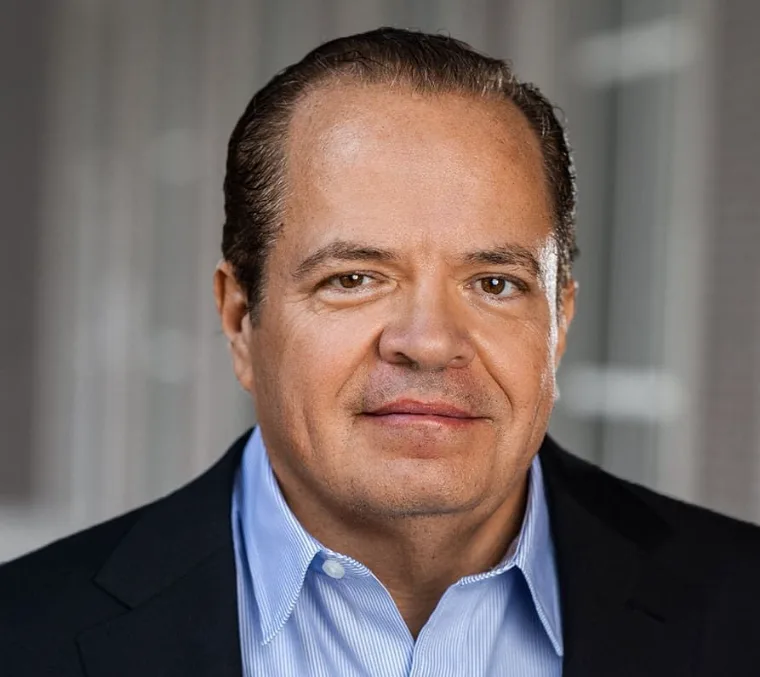
Startup to Nasdaq IPO in three years, then three more startups.
I founded Interland, the company that became Web.com, in 1997, and ran it as CEO through hypergrowth: from a startup to a Nasdaq IPO in three years, on its way to $200M in revenue and 650 people, with more than 200,000 small-business customers at 90%-plus retention and $50M-plus raised from Microsoft and Verizon along the way.
It was my second company; the first, WIPC.NET, was acquired in 2001. Since then I have held executive seats inside three more venture-backed startups at three different stages: Unqork, from $20M toward $100M ARR with a 100-plus-person organization; Coursedog, where I rebuilt the product and engineering organization and took ARR from $4M to $10M in nine months; and Blameless, as COO through a turnaround to its merger with FireHydrant. At every one of those sizes the same thing happened: the executive team, the operating rhythm and the plan the board was funding all had to be rethought for the next stage.
Bain's five-year study of 8,000 companies found that 85% of the barriers to profitable growth are internal, not market conditions, and that only one company in nine sustains profitable growth over a decade.1 I have felt those barriers from the founder's chair and the CEO's, and later from the investor's: a decade as a managing partner at a venture firm and board member across 35 deals and 18 exits.
What it looked like from the investor's chair, and a founder's.
“I led the first institutional round of investment in Interland, which Ken founded. His talent is evident in the meteoric growth path he guided it to. Ken is wise beyond his years. I would gladly work with and invest in him again.”
“We worked together over 4 years across 2 companies. I've watched Ken boost the output of software teams, raise hiring standards, and transform behavior by example. Every conversation with Ken leaves you inspired.”
Founders past product-market fit, whose company is growing faster than they are.
Venture-backed founders and startup CEOs, usually between a Series A and a Series C: a product in market, revenue, a team past the first dozen people, and product-market fit in hand or close. At Series A the job is the founder-led sales engine and the first real hires; from Series B on it is the move from builder to a leader with a team that runs without you. Yesterday you built the product. Today you build the organization that builds it, and the job changed under you.
If any of these are on your desk, this is the work: you just closed a round and the leadership team has to level up; you have to hire and lead people more experienced than you; everything still routes through you; the board wants a plan you do not have yet; and you cannot say any of that out loud to your team.
Why the hypergrowth CEO seat is hard to learn on the job.
Almost everyone in it is doing it for the first time. 75% of the CEOs who took 40 of the fastest-growing tech companies of the last decade to IPO were first-time chief executives, and when a founding CEO was replaced, it happened around a major funding round.2
Growing faster than the company can absorb is the most common way to die. Of 3,200 high-growth startups, 70% scaled prematurely; those that did had teams three times larger, and 93% never passed $100,000 in monthly revenue.3
The barriers are inside the building. 85% of the obstacles to sustained, profitable growth are internal, and only one company in nine sustains it over a decade.1
Nobody says so out loud. 72% of founders report an impact on their mental health, 81% do not share the stress, and 77% get no professional help with it.4
The hard part is rarely the product. It is the executive team, the board, the round, and the version of the founder the company needs next.
What coaching for a startup CEO in hypergrowth works on.
The work is growing the founder as fast as the company.
The board and the next round
What the board is really asking, how to run the meeting so it works for you, and how to walk into the next raise with a plan the investors already believe. I raised from Microsoft and Verizon, presented to the New Relic board, and sat on the investor's side of the table for a decade.
An executive team that runs without you
The systems that let execution scale without you doing it all: the first executive hires a founder makes, hiring people more experienced than you, and developing or, when needed, replacing with confidence once the team that got you here is not the team for the next stage. I built that team to 650 people, and led a 450-person organization through the same change at New Relic.
Out of the founder bottleneck
Delegate and elevate instead of over-functioning. Naming what only the CEO can do, handing over the rest, and dismantling the bottleneck the company has quietly routed through you. The move from builder to leader, made on purpose instead of by exhaustion.
Better decisions under pressure
Most calls a founder makes in this seat are made before the data exists. We work on the quality and speed of your decisions, on which ones are reversible, and on the ones only the CEO can make: an agenda-free room to pressure-test the high-stakes ones, with no board seat and no investor bias, and the blind spots named out loud.
Keeping speed and culture through 5x and 10x
Growth without integration creates organizational debt: retention slips, productivity drops, every new initiative takes longer. The operating rhythm below is how you see it before the financials do.
Surfacing and resolving conflict early
The co-founder conversation you have been avoiding, the executive who was right for the last stage, the board meeting that went sideways. Handled early, in private, with the decision rights written down.
Burnout, resilience and the loneliness of the seat
Most founders hide the stress and the burnout, and get no help with either. This is the confidential room for it: emotional regulation under sustained pressure, with someone who has sat where you sit and knows which parts of the weight are the job and which are you.
Selling into the next segment: SMB, mid-market, enterprise
Hypergrowth usually means selling to a buyer you have never sold to. I served 200,000-plus small businesses at Web.com, sold to 15,000-plus enterprise customers at New Relic, put a no-code platform into Goldman Sachs, Marsh and State Street at Unqork, and was the enterprise buyer myself inside Cox Automotive. I know what each of them needs to hear, and what your sales motion has to become.
When growth outruns the operating model: four moves.
At Web.com, and again at New Relic pushing 40% growth, I learned that growth without integration creates organizational debt: customer retention slips, productivity drops, and every new initiative takes two or three times longer. I wrote the method up in why integration beats growth speed. For a founder running a company in hypergrowth it comes down to four moves.
A growth council you chair, with real decision rights. Cross-functional, with P&L authority, meeting weekly with one job: find the constraint before it shows up in the board deck. Most founders run growth through the sales meeting and hear about the constraint from the CFO a quarter late.
A dashboard that pairs every growth number with the capability it depends on. Pipeline against onboarding capacity, new logos against support, releases against quality. The gap between each pair is the early warning, and reading it is the CEO's job, not a report you get.
Rate, direction and method, decided in one room. You, your CFO and your revenue leader on one question: if we hit the number, can we deliver it, and how will we pay for it? One meeting, not three, and the answer goes to the board as one plan.
A quarterly recalibration with one question. What capability do we need to build before we accelerate? It is the question the board should hear from you before it has to ask.
Under all four sits the frame I have used since my first company: the right formula, the right tactics, and repeatable actions.
Why a coach who has held the seats around yours.
A founder in the CEO seat sits above an executive team that is learning its jobs as fast as you are learning yours, in front of a board that funded the growth and now wants it delivered, and across the table from the next investor. The hardest problems in the seat live in those relationships, not in the product.
Most executive coaches have been near the room. I was in the room, driving, at every scale your company is heading for: a startup from zero to a Nasdaq IPO, growth at a public unicorn, New Relic from $300M to $500M, and transformation inside an 80-year-old enterprise at Cox Automotive, a $3B platform with more than 1,000 engineers. I have held the CEO, COO, CPO and CTO seats at different companies, so I know the dynamics of each role around yours from the inside, and a decade as an investor and board member across 35 deals and 18 exits means I know how the board sees it. And because hypergrowth usually means selling to a buyer you have never sold to, it matters that I have sold to all three: small business, mid-market and enterprise, and sat on the enterprise buyer's side of the table too.
I have held each of those chairs: founder and CEO through a Nasdaq IPO, EVP at New Relic, COO in a VC-backed turnaround, Chief Product Officer through an $80M acquisition, and a decade as a managing partner at a venture firm. I have sat on every side of the table, so I understand how the whole organization moves, not just the seat you are in.
I am also a certified coach, CEC and ICF certified since 2019, with a psychology degree. We can work on the operating plan and the person carrying it in the same hour.
Four steps, no mystery.
Discovery call. Forty-five minutes on video, no pitch: what is actually going on, and whether I am the right person for it.
Calibration. We agree what success looks like and how we will both know, before the work starts.
Standing calls. Weekly, every other week or monthly, on video or in person.
Access between calls. The hard things do not wait for the calendar. More on the approach on the executive coaching page, and on choosing any coach in six questions to ask.
The ones people actually ask.
What does a startup CEO coach do?
It is not therapy and it is not consulting. A startup coach for the CEO seat, a startup CEO coach, is a confidential, structured partnership that helps a founder scale their leadership capacity, clear the strategic bottlenecks, and make high-pressure decisions well: the board, the executive team and team alignment, the role evolution from hands-on operator to executive leader, and the version of you the next stage needs. The best ones have held the seat. I took the company that became Web.com from a startup to a Nasdaq IPO in three years.
Have you been a founder yourself?
Yes, twice. The first company was acquired in 2001. The second, Interland, became Web.com: from a startup to a Nasdaq IPO in three years, on its way to $200M in revenue and 650 people, with $50M-plus raised from Microsoft and Verizon along the way. Most coaches have studied startups. I have run one from the first hire to the IPO, and held executive seats inside three more since.
What stage founders do you coach?
Usually venture-backed, usually between a Series A and a Series C: a product in market, revenue, a team past the first dozen people, and product-market fit in hand or close. Earlier than that, a coach is mostly a sounding board. Later, the work shifts toward the executive team, the board and the next round.
I am the founder. Do I need a founder coach or a CEO coach?
The same person, if you are running the company. Founder coaching, or executive coaching for startup founders, tends to mean the person: identity, co-founders, the stress. CEO coaching tends to mean the job: the board, the team, the round. In hypergrowth they arrive together, and I coach both in the same hour.
How is a startup CEO coach different from an advisor, a mentor, a board member or a therapist?
An advisor gives you answers. A mentor has been there and shares it when asked. A board member has a duty to the company and a vote. A therapist works on the past and how you feel about it. A coach is confidential, has no stake in the outcome, and works on how you decide and lead now, with enough experience to know what the decision feels like. I have been the board member and the advisor as well as the coach.
When does a scaling CEO need a coach, and when is it too early?
The useful moment is when the company starts growing faster than the operating model, the executive team or your own role: usually just after product-market fit, or the Series A or B that follows it. Before that a coach is mostly a sounding board. After it, the cost of learning on the job is measured in months of runway.
My board suggested a coach. Do investors actually support that?
The good ones pay for it. Several venture firms give portfolio founders a coaching stipend outright, and boards that lose faith in a founding CEO tend to replace them around a major round, not send a coach. A board that offers one is investing in keeping you in the seat. Take it, and choose the coach yourself.
What kinds of challenges do you help founders with?
The board and the next round; an executive team that runs without you; getting out of the founder bottleneck; better decisions under pressure; keeping speed and culture through 5x and 10x growth; surfacing and resolving co-founder and executive conflict early; burnout, resilience and the loneliness of the seat; and selling into the next segment, whether that is SMB, mid-market or enterprise. Each one is a section on this page, with the seat I held it from.
What should a first-time CEO fix first when the company is growing faster than the team?
Decision rights and the executive team, in that order. Write down which decisions are yours as the founder and CEO, which belong to your executives, and which go to the board. Then look hard at whether the team that got you here can run the company at the next size. Premature scaling shows up first as a team three times bigger than the revenue supports.
How often do we meet, and how do I know it is working?
Standing calls weekly, every other week or monthly, on video or in person, with access between them when the hard thing does not wait. We agree what success looks like before the work starts, in writing, so both of us can tell. The early signs are faster decisions, an executive team that needs you less, and a board meeting that goes the way you planned it.
What if we scaled too early or the market turned?
Then the seat changes, and the job is to change with it. I ran a VC-backed turnaround as COO at Blameless: burn cut in half, runway extended 18 months, the win rate rebuilt from near zero to 80%, and a merger with FireHydrant at the end of it. Cutting cost without cutting the heart out of the company is a skill, and it can be coached.
Is coaching worth it for a startup CEO, and what does it cost?
Worth it when the decisions in front of you are worth more than the fee, which in hypergrowth is most quarters. Published US ranges run $1,000 to $10,000 a month on retainer, and $800 to $3,500 an hour at CEO level; the full breakdown, who pays, and how I price are in my guide to what executive coaching costs. You get a scope and a number on the discovery call.
Who is the best startup CEO coach?
The one who has held your seat at your stage, and can prove it. The guides that rank on this question and the AI engines that answer it use the same test: someone who has done the job rather than studied it, operator credibility through 10x team or revenue growth, references from CEO clients, an ICF credential as table stakes, and a first call where they push back instead of agreeing. For a venture-backed founder past product-market fit, that is the seat I held, from a startup to a Nasdaq IPO in three years, and I am ICF and CEC certified. The full seven tests, from the board room to the round to the executive team, are in my guide to how to pick the best startup CEO coach.
Do you only work with venture-backed startups, and do you work outside Atlanta?
Mostly venture-backed, because that is the seat I held; a bootstrapped company growing at the same pace has the same problems, and we can talk. Standing calls run on video with founders and CEOs anywhere, and I work in person when the engagement calls for it. I am based in Alpharetta, Georgia, and for years commuted weekly to the West Coast while running national roles from here.
Start with a short note.
A short note is enough: where you sit, and what is on your desk. The round, the executive team, the board, the co-founder. I read every note myself. If you would rather talk, book a discovery call.
Or reach me directly:
(629) 304-8755
ken@kengavranovic.com
Where the numbers come from.
- Bain & Company, press release on The Founder's Mentality (Chris Zook and James Allen; 8,000 companies, 40 countries), 2016
- Russell Reynolds Associates, Beyond the Founding Team: A Leadership Playbook for Growth, CEOs (40 high-growth tech companies)
- Startup Genome, Premature Scaling: A Deep Dive (3,200 high-growth startups), 2011
- Startup Snapshot, The Untold Toll: The Impact of Stress on the Well-Being of Startup Founders and CEOs (400+ founders), April 2023