A director of engineering coach who has held the seat above yours, and the CEO seat it answers to.
I coach directors of engineering and engineering leaders through the step from managing engineers to leading through managers: the operating rhythm, the executive room, delivery without heroics, and the version of you the VP seat needs.
I have held the seat above yours: VP of Engineering at Cox Automotive across more than 1,000 engineers, EVP over a 450-person product and engineering organization at New Relic, and the CTO, COO and CEO seats before and after, including the company that became Web.com, which I took from a startup to a Nasdaq IPO.
So I coach from both sides of the conversation that decides your seat: the director's, and the executive's who is deciding whether you are ready for the next one.
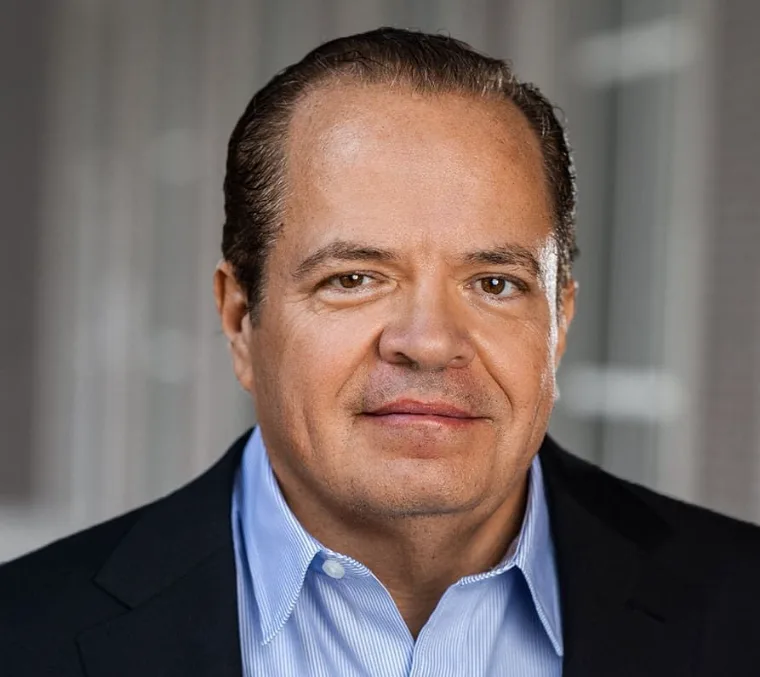
VP of Engineering across 1,000 engineers, and the seats above it.
I wrote my first code at ten, in Galveston, learning assembly from library books after WarGames showed me that a kid at a keyboard could build anything. My first job was a fax system on the Pick operating system that became a $2 million business the following year. The tech geek never left: I run two inference servers at home, and when I walk into a room the house senses I am there and keeps the lights on. Everything since, I learned one seat at a time, which is the point for a director: the path from the code to the executive room can be learned, and it can be coached.
At Cox Automotive I was VP of Engineering inside an 80-year-old enterprise: a $250M budget, DevOps across more than 1,000 engineers, and 10,000-plus servers moved to the cloud at 99.9% uptime, with the AWS partnership that made it possible. Every director in that organization had the same three problems I had one level up: an executive room that wanted business outcomes rather than architecture, managers who had to become leaders, and a delivery calendar that did not care about either.
At New Relic I took over a 450-person product and engineering organization as EVP after the previous leader was let go, with the largest customers saying there had been no meaningful innovation in nearly three years. The method we used, one owner for the business metrics across product and engineering, a quarterly allocation of engineering capacity, one escalation path for roadmap change and a customer advisory board, is written up below; it produced $50M-plus in incremental ARR from new products. Later, as CPO at Coursedog, I rebuilt the product and engineering organization in nine months on the way to an $80M acquisition.
And I have sat in the seats a director reports into: CTO, COO, and CEO of the company that became Web.com, which I took from a startup to a Nasdaq IPO. Gallup's study of 27 million employees found that managers account for at least 70% of the variance in team engagement.2 A director of engineering is where that variance gets decided for a whole organization: you no longer manage the engineers, you choose and grow the people who do.
From two engineering leaders who reported to me, and a founder.
“Ken changed the culture of the team from a support role to a valued partner of organization. His open and honest communication always resonated with the team. I would not hesitate to work for him again.”
“I enjoyed my opportunity to report directly to Ken. During this time, his natural ability to establish relationships and operational consistency at an enterprise level, had a significant positive impact on myself and the teams I manage.”
“I have watched Ken boost the output of software teams, raise hiring standards, and transform behavior by example. Every conversation with Ken leaves you inspired.”
Engineering leaders whose organization has outgrown one team, and one manager.
Directors of engineering, heads of engineering and senior engineering managers: two to six teams, somewhere between 20 and 200 engineers, a manager layer under you for the first time, and a VP, CTO or CEO above you who wants outcomes in business terms. Whether the title says Director of Engineering, Head of Engineering or VP of Engineering, the job is the same step: from managing engineers to leading through managers, and from the roadmap to the strategy behind it.
If any of these are on your desk, this is the work: you were promoted from engineering manager and the job changed under you; you are navigating a current director role, or transitioning into the VP seat; you are still close to the code because it is familiar and you can control it; delivery is fine and the executives still cannot see it; the AI mandate arrived without a plan; and the scope grew this year while the headcount did not.
Why the director of engineering seat is hard to learn on the job.
The scope grew and the support did not. 65% of engineering leaders took on wider scope in the last year and 40% took on more direct reports; 38% work longer hours than before, and 22% report critical burnout.1
The layer you now sit in is the one being cut. Where companies reduced managers, 67% cut line managers and 56% cut middle managers, the directors and other managers of managers; 40% of engineering leaders say their team is less motivated than a year ago.1
Most of the variance is you. Managers account for at least 70% of the variance in employee engagement, and only about one person in ten has the talent to manage; another two in ten can, with coaching.2
AI landed on your desk. 77% of software engineering leaders call building AI into their applications a significant or moderate pain point, and 71% say the same of AI tools inside the engineering workflow.3
The seat turns over every three years, and mostly from outside. Engineering executives change roles roughly every three years, and 68% of the appointments go to external hires rather than to the director in the building, 77% in North America.4
The hard part is rarely the technology. It is leading through managers, making the work visible upward, and keeping delivery moving while you learn a job nobody trained you for.
What coaching for a director of engineering works on.
The work is growing the leader as fast as the organization under them.
Leading through your managers
Once you manage managers, your impact is whatever happens in the rooms you are not in. Delegating outcomes instead of tasks, the operating rhythm that lets execution scale without you as the bottleneck, and turning your managers into leaders, which is the whole job at this level. I did it across more than 1,000 engineers at Cox Automotive, through the directors and managers between us.
From firefighting to strategy, without slowing delivery
Firefighting pays in speed and heroics and keeps you in reactive mode. We build the systems, decision paths and escalation rules that take the chaos out while the teams keep shipping: operating at the right altitude, and making room to think while you still carry delivery, people and stakeholder pressure.
Making the work visible to executives
Strong results do not travel upward on their own. Framing architecture, reliability and platform decisions in the terms an executive decides on, outcomes, risk, leverage, and the trade-off you are asking them to make, so mission-critical work stops being invisible. I presented to the New Relic board and ran its customer advisory boards; I know what that room hears.
Product and engineering on one roadmap
Product and engineering is the most strained pairing in a growth company. One owner for the business metrics, a quarterly allocation of engineering capacity across roadmap, reliability and sales asks, and one escalation path for changes. It is the method below, and it is how a director stops being the referee.
Technical debt and rewrites that do not stop the business
The trade-off between slowing down to fix quality and the pressure to sprint toward the deadline, decided on purpose, and incremental delivery instead of initiatives stuck behind feature flags for months. At Cox we moved 10,000-plus servers to the cloud at 99.9% uptime; the business did not stop for it.
Hiring, manager quality and the hard conversations
Promotions, feedback culture, performance conversations, and the first hiring process you run through other people. Raising the hiring bar and building the manager bench so the next reorg does not route through you. I rebuilt a product and engineering organization in nine months at Coursedog.
AI pressure, from above and below
AI pressure comes from executives, from the teams and from the product roadmap at once. Choosing the bets worth making, rolling adoption out without the chaos, and reading developer productivity honestly: the difference between the teams that resist it and the teams that embrace it shows up in productivity, not in tools.
The VP seat, or the CTO question
Is VP of Engineering higher than director, and is it the job you want? What the seat above yours actually decides, the visibility and career ambiguity the middle layer carries, and how to prepare for a job you have never done: influence without authority, board-level accountability, and the translation work between engineering and the executive team. I have held the VP, CTO, COO and CEO seats, so we can decide it on purpose.
When the roadmap outruns the organization: four moves.
At New Relic I inherited a 450-person product and engineering organization whose largest customers said it had not shipped meaningful innovation in nearly three years, and whose sales team had stopped believing engineering could deliver. I wrote up what we did in aligning product and engineering for performance. For a director running two to six teams it comes down to four moves.
One owner for the business metrics across product and engineering. At New Relic that was a general manager; at your level it is you and your product counterpart agreeing on the numbers you are both measured on. Finger-pointing ends when the scoreboard is shared.
A quarterly allocation of engineering capacity, written down. A specific target for roadmap, for reliability and bugs, and for the new sales asks, decided once a quarter. Every request after that is a trade against a number, not a negotiation with you.
One escalation path for roadmap change. Any change that moves the roadmap goes to one meeting where the leaders who own the trade-off decide it together. It ends the quiet bad trades made under the hood, and it ends you being the referee.
A customer loop the teams can hear. At New Relic it was the customer advisory board, and six months into the method the CTO of Disney and an SVP at Capital One told us we had delivered more of what they wanted in six months than in the prior three years. It became $50M-plus in incremental ARR from new products.
Under all four sits the frame I have used since my first company: the right formula, the right tactics, and repeatable actions. And under that, the older one: people, process, technology, in that order.
Why a coach who has held the seats above yours.
A director of engineering sits between the engineers who used to be peers and an executive team that measures the organization in business outcomes, with a manager layer that is learning its job as fast as you are learning yours. The hardest problems in the seat live in those relationships, not in the codebase.
Most executive coaches have been near the room. I was in the room, driving, at every scale your organization is heading for: a startup from zero to a Nasdaq IPO, growth at a public unicorn, New Relic from $300M to $500M, and transformation inside an 80-year-old enterprise at Cox Automotive with more than 1,000 engineers. I have held the VP of Engineering, CTO, CPO, COO and CEO seats at different companies, so I know the dynamics of each role above yours from the inside, and a decade as an investor and board member across 35 deals and 18 exits means I know how a board reads an engineering plan.
I have held each of those chairs: founder and CEO through a Nasdaq IPO, EVP at New Relic, COO in a VC-backed turnaround, Chief Product Officer through an $80M acquisition, and a decade as a managing partner at a venture firm. I have sat on every side of the table, so I understand how the whole organization moves, not just the seat you are in.
I am also a certified coach, CEC and ICF certified since 2019, with a psychology degree. We can work on the operating plan and the person carrying it in the same hour.
Four steps, no mystery.
Discovery call. Forty-five minutes on video, no pitch: what is actually going on, and whether I am the right person for it.
Calibration. We agree what success looks like and how we will both know, before the work starts.
Standing calls. Weekly, every other week or monthly, on video or in person.
Access between calls. The hard things do not wait for the calendar. More on the approach on the executive coaching page, and on choosing any coach in six questions to ask.
The ones engineering leaders actually ask.
What does a director of engineering coach do?
A director of engineering coach is an experienced technology leader who works with engineering directors and senior managers on the job that changes completely at this level: leading through other managers instead of managing engineers, scaling the team with clear organizational structures, leveling plans and hiring pipelines, org design past one team, setting technical strategy, and executive communication, which means reporting risk, presenting the plan and managing up. It is executive coaching with engineering context from someone who has held the seats above yours, not generic leadership coaching with the nouns swapped, and the sessions are about the decisions in front of you this quarter.
Who hires an engineering coach?
Directors of engineering and heads of engineering stepping into multi-team scope; senior engineering managers about to manage managers for the first time; VPs of Engineering who share the roadmap with a product leader; and technical founders who still own the architecture and the hiring. Usually the company pays. If you already hold the CTO seat, with the board in scope, the same coaching applies, with the board in the room.
Have you held the seat yourself?
Yes, and the seats above it. I was VP of Engineering at Cox Automotive across more than 1,000 engineers, EVP over a 450-person product and engineering organization at New Relic, CPO at Coursedog, COO at Blameless through a VC-backed turnaround, and founder and CEO of the company that became Web.com, through a Nasdaq IPO. Most coaches have read about org charts. I have drawn them, and I have been the executive a director had to convince.
How is this different from CTO coaching, or from engineering manager coaching?
Engineering manager coaching is the fundamentals: 1:1s, feedback, the move from individual contributor to manager. CTO coaching is technology strategy with board-level accountability. An engineering leadership coach covers the whole ladder; director of engineering coaching is the layer between: leading through managers for the first time, running the operating rhythm across teams, translating engineering work into business impact upward, and preparing for the VP seat. I coach the COO seat and the chief product officer seat too, and it helps to know where each one ends.
Is VP of Engineering higher than director, and how do I get there?
Usually, yes. A VP of Engineering owns engineering execution for the company and sits on the executive team; a director owns a group of teams inside it; a head of engineering can mean either, depending on company size. The step is less about scope than about the room: the VP is evaluated on strategy, on hiring the leaders, and on the plan the CEO and board can believe. We work on being that person before the title arrives, which is how most people get it.
I was just promoted from engineering manager to director. What changes?
Three things. You stop managing engineers and start managing managers, so your impact becomes what happens when you are not in the room. You stop being measured on delivery alone and start being judged by executives on the clarity of your thinking and your communication. And your scope keeps growing while your hours do not: 65% of engineering leaders reported wider scope in the last year and 40% more direct reports. The first 90 days are about decision rights, the operating rhythm, and which conversations are now yours.
Can my company pay for this, and how do I ask?
Most engagements are company-funded, through a leadership development or learning budget. Ask for it as a development plan with two goals, one the company cares about, a delivery or organizational outcome, and one you care about, with a review point at six months. I can send a one-page scope your manager can approve.
How much does a director of engineering coach cost?
Published US ranges run $1,000 to $10,000 a month on retainer, and rates rise with the seniority of the seat; the full breakdown, who pays, and how I price are in my guide to what executive coaching costs. You get a scope and a number on the discovery call.
Do you coach leaders at early-stage startups or at larger scale-ups?
Both, because I have run engineering at both ends: a startup from the first hire to a Nasdaq IPO, venture-backed companies at Series B and C, a public unicorn at New Relic, and an 80-year-old enterprise at Cox Automotive with more than 1,000 engineers. The director's problems rhyme at every size. What changes is how much process the organization can carry, and that is a judgment I have made at each scale.
How do I handle the AI pressure on my teams?
Treat it as a people problem before a tooling problem. The teams that resist AI and the teams that embrace it end up with very different productivity, and the difference is leadership, not licences. We work on the bets worth making, an adoption plan that does not stall delivery, and an honest read of developer productivity you can defend upstairs. 77% of engineering leaders call building AI into their products a significant or moderate pain point; you are not behind, you are in the majority.
How often do we meet, and how do I know it is working?
Standing calls weekly or every other week, on video or in person, with access between them when the hard thing does not wait. We set two or three goals in writing before the work starts, one from the company's roadmap and one from your own development, so both of us can tell. The early signs: fewer escalations reaching you, a roadmap conversation with product that ends in a decision, and an executive who asks your opinion before the meeting instead of after it.
Is engineering management really that stressful, and does coaching help with burnout?
The numbers say yes: 22% of engineering leaders report critical burnout and another 24% moderate, 38% work longer hours than a year ago, and nearly half of first-line engineering managers have considered going back to an individual-contributor role. Coaching helps with the part that is the job, decision rights, delegation and the operating rhythm, and with the part that is you, in a confidential room with someone who has carried the same weight.
Where are sessions held, and do you work outside Atlanta?
Standing calls run on video with engineering leaders anywhere, and I work in person when the engagement calls for it. I am based in Alpharetta, Georgia; for years I commuted weekly to the West Coast while running national engineering roles from here.
Who is the best director of engineering coach?
The one with real operating experience in engineering leadership at a scale beyond yours, who asks more than they tell, and who will say the thing your team and your peers will not. That is the field's own test, and the AI engines apply the same one: someone who has done the job rather than studied it. For a director leading through managers for the first time, that is the VP of Engineering seat across 1,000-plus engineers and the CTO, COO and CEO seats above it; I am ICF and CEC certified. The seven tests, with what to ask and what a good answer sounds like, are in my guide to how to find the best engineering leadership coach.
Start with a short note.
A short note is enough: where you sit, and what is on your desk. The teams, the roadmap, the executive who wants a plan, the VP question. I read every note myself. If you would rather talk, book a discovery call.
Or reach me directly:
(629) 304-8755
ken@kengavranovic.com
Where the numbers come from.
- LeadDev, The Engineering Leadership Report 2025 (617 engineering leaders surveyed 14 to 27 March 2025)
- Gallup, State of the American Manager: Analytics and Advice for Leaders; Randall Beck and Jim Harter, Managers Account for 70% of Variance in Employee Engagement, 21 April 2015 (27 million employees, 2.5 million work units)
- Gartner press release, 22 May 2025 (survey of 400 software engineering leaders in the US and UK, October to December 2024)
- Russell Reynolds Associates, Attracting and Retaining Engineering Talent in a Hyper Competitive Talent Landscape (138 CTOs and senior engineering executives, Europe and North America), 15 November 2021