A founder coach for venture-backed startups who has been the founder: startup to Nasdaq IPO in three years.
I coach founders and founder-CEOs of venture-backed and bootstrapped startups, from the seed round to Series C: the co-founder relationship, the first board, the next round, the first executive hires, and the version of you the company needs next.
I founded Interland, the company that became Web.com, and took it from a startup to a Nasdaq IPO in three years, on its way to $200M in revenue and 650 people, with $50M-plus raised from Microsoft and Verizon along the way. It was my second company; the first was acquired. Since then I have held executive seats inside three more venture-backed startups, and spent a decade as a managing partner at a venture firm and board member across 35 deals and 18 exits.
So I have sat in the founder’s chair, the CEO’s, the investor’s and the board’s. I coach from each side of the table that decides your company.
Before the Series A? The success-based programme is here.
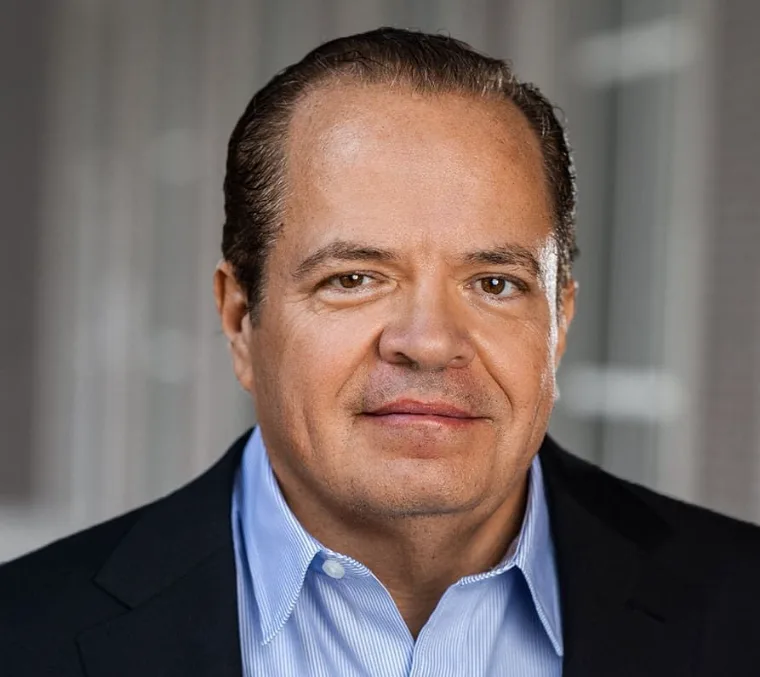
From a rented floor to a Nasdaq IPO, then three more startups.
I did not start with money. In my twenties the car was close to being repossessed and the rent was behind. I moved to Atlanta in 1997 because it had the lowest cost of living and the densest fiber, put my savings into renting a floor at 34 Peachtree, and built the company that became Web.com from there: 200,000-plus small-business customers at 90%-plus retention, $50M-plus raised from Microsoft and Verizon, and a Nasdaq IPO three years in.
I know the first hires, the first board meeting you walk into underprepared, the quarter the model breaks, the round that has to close, and the merger at the end: Interland merged with MicronPC to create Web.com. Since then: Unqork, from $20M toward $100M ARR with a 100-plus-person organization; Coursedog, where I rebuilt product and engineering and took ARR from $4M to $10M in nine months; and Blameless, as COO through a VC-backed turnaround to its merger with FireHydrant.
And a decade on the other side of the table: managing partner at a venture firm, investing in and operating SaaS and technology businesses, with an 11x return on Invirtus among the exits. When I say I know how your investor reads the board deck, it is because I wrote the questions.
What it looked like from the investor's chair, and a founder's.
“I led the first institutional round of investment in Interland, which Ken founded. His talent is evident in the meteoric growth path he guided it to. Ken is wise beyond his years. I would gladly work with and invest in him again.”
“We worked together over 4 years across 2 companies. I've watched Ken boost the output of software teams, raise hiring standards, and transform behavior by example. Every conversation with Ken leaves you inspired.”
Founders at three moments, venture-backed or bootstrapped.
Founder coaching is for the person running the company, at whichever stage the company is. The problems change by stage; the pattern is the same: the company starts to outgrow the way you have run it so far, and the next version of you is running late.
Before the Series A
Angel-backed or bootstrapped, a product in market and the first customers, and the round or the profitability plan ahead of you. The work is focus: what only you can do, the first hires, the first real board, and the pitch that has to land. If you are pre-revenue and still validating, a mentor, an accelerator or a peer group answers that better than a retainer; say so on the call and I will tell you straight.
Series A to Series C
Venture-backed, past product-market fit, a team past the first dozen people, and a board for the first time. The job changed under you: yesterday you built the product, today you build the organization that builds it. This is the hypergrowth seat, and it has its own page.
Founder to CEO, or founder beside a CEO
The company has outgrown the way you run it, or the board has hired an operator and you are deciding what your seat is now. Decision rights, the executive team, the operating rhythm, and a plan the board is funding. I have been the founder who stayed CEO through an IPO, and the executive brought in beside founders at three later startups.
Bootstrapped at any of these stages: the same problems, with your own money at stake, and we can talk.
Why the founder’s seat is hard to learn on the job.
Most people in it are doing it for the first time. Three in four of the CEOs who took 40 of the fastest-growing technology companies of the last decade to IPO were first-time chief executives, and where a founding CEO was replaced, it happened around a major round.1
The usual way to die is to grow faster than the company can absorb. Of 3,200 high-growth startups, 70% scaled prematurely, carried teams three times larger than the revenue justified, and 93% of those did not reach $100,000 in monthly revenue.2
Few say so out loud. 72% of founders report an impact on their mental health, 81% keep the stress to themselves, one in ten turns to an investor with it, and 77% get no professional help.3
And the people in the seat mostly go without outside counsel while saying they want it. Nearly two-thirds of the CEOs in a Stanford survey received no coaching or leadership advice from outside the company, and most of them said they would welcome it.4
The hard part is rarely the product. It is the co-founder, the board, the round, and the version of the founder the company needs next.
What founder coaching works on.
The job is to grow the founder at least as fast as the company grows.
The co-founder conversation
The one you have been avoiding: who decides what, who does what, and what happens if one of you wants out. Had early, in private, and written down as decision rights before it becomes a dispute. I have had it from the co-founder’s chair.
Your first board
What the board is really asking, how to run the meeting so it works for you, and how to say the hard thing before they find it in the numbers. I raised from Microsoft and Verizon, presented to the New Relic board, and sat on the investor’s side of the table for a decade.
The next round, and the plan behind it
Walking into the raise with a plan the investors already believe, and knowing the difference between a round you need and a round you want. A founder choosing between the next round and a sale is a conversation I have coached.
The first executive hires
Hiring people more experienced than you, and leading them. The team that got you here is often not the team for the next stage, and replacing with confidence is a skill. I hired that team on the way to 650 people, and later led a 450-person organization at New Relic through the same change.
Out of the founder bottleneck
Naming what only you can do, handing over the rest, and dismantling the bottleneck the company has quietly routed through you. The move from builder to leader, made on purpose rather than by exhaustion.
Founder to CEO
The job changed under you: decision rights, the operating rhythm, the executive team, and a board meeting that goes the way you planned it. Or the other version: an operator has been brought in beside you, and your seat needs a definition. I have been on both sides of that hire; the operator’s side of it is on the COO coach page.
Burnout, isolation and the loneliness of the seat
Most founders hide the stress and get no help with it. This is the confidential room for it, with someone who has sat where you sit and knows which parts of the weight are the job and which are you.
When the model breaks
A pivot, a cut, a turnaround. As COO at Blameless I cut burn in half, extended runway 18 months, rebuilt the win rate from near zero to 80%, and merged the company with FireHydrant. Cutting cost without cutting the heart out of the company can be coached.
Three ways to work together, priced to the stage.
Engagements are scoped to the founder and the stage: a three-month minimum, then month to month, with no annual contract. Most run three to six months; some run longer. Standing calls weekly or twice a month, about an hour on video, with access between calls when the hard thing does not wait.
Before the Series A: the success-based programme
For angel-backed and bootstrapped founders with a product in market: $500 a month for up to six months, with equity or options agreed up front and a three-month minimum. The same calls, the same calibration, the same confidentiality; the fee is sized to the stage, the upside to the outcome.
Series A and beyond: a monthly retainer
From $1,000 a month, cash or cash plus equity, set by the time the work needs and the initiative in front of you. The market ranges, who pays and how I price are in the cost guide.
A defined outcome: retainer plus a share of the result
When there is one project you want driven to a measurable result (a round, a turnaround, a transformation, the value plan your PE or VC owner is holding you to) and the value can be quantified, we agree the measure before the work starts and part of the fee is a share of the result.
You leave the discovery call with a scope and a number.
If your board or your fund is paying.
The good ones pay for it. Several venture firms give portfolio founders a coaching stipend outright, and one commits 1% of each first check to founder development.5 A board that offers a coach is investing in keeping you in the seat. Take it, and choose the coach yourself.
If you are the investor or the operating partner arranging it: the founder chooses the coach, the goals are agreed with the founder in calibration, and what you see is the cadence and progress against those goals, not the content of the sessions. Start with a call about the company and the situation. If I am not the right fit for the founder, I will say so.
Why a coach who has been the founder, and the investor.
Most founder coaches have been founders. Fewer have also been the investor, the board member and the executive brought in beside a founder. I have held each of those chairs: founder and CEO through a Nasdaq IPO, a decade as a managing partner at a venture firm, EVP at New Relic, COO in a VC-backed turnaround, and Chief Product Officer through an $80M acquisition. I know how the board reads your deck because I have written the questions, and I know what it costs to sit where you sit. Since 2020 I have coached hundreds of executives and founders, and I push back where a mentor would nod.
I am also a certified coach, trained, with a BS in Psychology, Summa Cum Laude, a CMHC master’s underway, ICF and CEC certifications, and co-author of Business Breakthrough 3.0, an Amazon bestseller. So the operating plan and the person carrying it get worked on in the same hour.
Four steps, no mystery.
Discovery call. Forty-five minutes on video, no pitch: what is actually going on, and whether I am the right person for it.
Calibration. We agree what success looks like and how we will both know, before the work starts; if the company or the fund is paying, what they see is agreed here too.
Standing calls. Weekly or twice a month, on video, in person when the engagement calls for it.
Access between calls. The hard things do not wait for the calendar. Under the four steps sits the frame I have used since my first company: the right formula, the right tactics, and repeatable actions. More on the approach on the executive coaching page, and on choosing any coach in six questions to ask.
The ones people actually ask.
What is founder coaching?
A confidential, structured partnership between a founder and a coach who has been one, on the decisions in front of you now: the co-founder, the board, the round, the team, and the version of you the company needs next. Not therapy, not consulting, and not a mentor’s war stories, though the stories are there when you want them.
Founder coach, startup coach or CEO coach: which one do I need?
Mostly the word you typed. A startup coach usually means the business at an early stage; a founder coach tends to mean the person, identity, co-founders, the stress; a CEO coach tends to mean the job, the board, the team, the round. If you are the founder running the company, you want one person who does both, and I coach both in the same hour. The hypergrowth CEO seat has its own page.
What stage do you coach, and is pre-revenue too early?
From the seed round to Series C, venture-backed or bootstrapped, with a product in market and the first customers. Pre-revenue and still validating: usually not yet, and not out of the runway; a mentor, an accelerator or a peer group answers that better than a retainer. The moment to start is when the company begins to outgrow the way you have run it so far.
How does the equity part work?
For founders before a Series A, the programme is $500 a month for a minimum of three and up to six months, with equity or options agreed up front; after that, a retainer from $1,000 a month in cash or cash plus equity. The equity is agreed in writing before the first session, sized to the stage, and not a condition of the coaching: if you would rather pay cash, say so.
How do you price a results-based engagement?
When there is one defined outcome and its value can be quantified, we agree the measure, the baseline and the share before the work starts, in writing. The retainer covers the work; the share covers the result. If the value cannot be quantified honestly, we do not pretend it can, and it stays a retainer.
How often do we meet, and for how long?
Weekly while a round, a restructure or a crisis is live, twice a month in a steadier rhythm, about an hour on video, with access between calls. Month to month after the first three; most engagements run three to six months, and some run longer.
Will my investors support it, and who pays?
Usually yes, and often they pay: several venture firms fund a coaching stipend for each portfolio founder, and boards that lose faith in a founding CEO replace them around a round rather than send a coach. A board that offers one is backing you. Take it, choose the coach yourself, and agree up front what the board sees: the cadence and progress against the goals, not the content.
Is it confidential from my co-founder and my board?
Yes. What is said in a session stays in the session. If the company or the fund is paying, they know it is happening and may agree the goals up front; they do not get the content. When the co-founder conversation needs both of you in the room, that is a separate session we set up on purpose.
Have you been a founder yourself?
Twice, and an executive inside three more startups since. The first company was acquired. The second, Interland, became Web.com: startup to Nasdaq IPO in three years, $200M in revenue, 650 people. Then Unqork, Coursedog and Blameless at three different stages, and a decade as a venture investor and board member.
Do you work with bootstrapped founders?
Yes. The problems are the same, with your own money at stake instead of a fund’s, and the pre-Series A programme was built with bootstrapped and angel-backed founders in mind.
When should a founder start with a coach?
At the inflection point: product-market fit in sight, the first real hires, the first board, the round ahead. Starting earlier works if there is a product in market; six months after the round is not too late, it is the usual time. If you are still validating the idea, start with a mentor and come back.
How do I choose a founder coach?
Three tests. Has this person been the founder, not near one? Are they trained and certified, not only experienced? And after one real conversation, did you hear something true you had not said out loud? The full seven tests are in my guide to picking a startup CEO coach.
Will you push back?
Yes, where a mentor would nod. The one objective I hold is the goal you named in calibration, so when a plan, a hire or a story does not square with it I say so, in the room, with my reasoning. You still own the decision; the company is yours.
Do you work remotely, or only in Atlanta?
Standing calls run on video with founders anywhere; I work in person when the engagement calls for it. I am based in Alpharetta, Georgia, and ran national roles from here for years.
Start with a short note.
A short note is enough: where you sit, what stage the company is at, and what is on your desk. The co-founder, the board, the round, the team. I read each note myself. If you would rather talk, book a discovery call.
Or reach me directly:
(629) 304-8755
ken@kengavranovic.com
Where the numbers come from.
- Russell Reynolds Associates, Beyond the Founding Team: A Leadership Playbook for Growth, CEOs (40 high-growth technology companies that went public 2017 to 2021)
- Startup Genome, Premature Scaling: A Deep Dive (3,200 high-growth startups), 2011
- Startup Snapshot, The Untold Toll: The Impact of Stress on the Well-Being of Startup Founders and CEOs (400-plus founders), 2023
- Stanford Graduate School of Business, Rock Center for Corporate Governance and The Miles Group, 2013 Executive Coaching Survey (200-plus CEOs, directors and senior executives)
- Forbes, This VC Firm Is Gifting Founders 1% Of Every Invested Dollar To Spend On Coaching And Mental Health (the Felicis Founder Pledge), September 2018; and Pillar VC, How to Choose a CEO Coach for Startup CEOs (the portfolio coaching stipend)