A VP of Engineering coach who has held the seat, and the CEO seat it reports to.
I coach VPs of Engineering and CTOs through the move from managing teams to operating at the executive level: scaling the team through your managers, being read by the CEO, the CPO and the board, and the delivery you still own.
I was the VP of Engineering at Cox Automotive through a cloud and DevOps transformation across more than 1,000 engineers. Before that I ran product and engineering as EVP and GM at New Relic, growing a $300M business to $500M, and before that I founded Interland, the company that became Web.com, and took it to a Nasdaq IPO as CEO.
So I coach from both sides of the conversation you are in: the engineering leader's, and the CEO's.
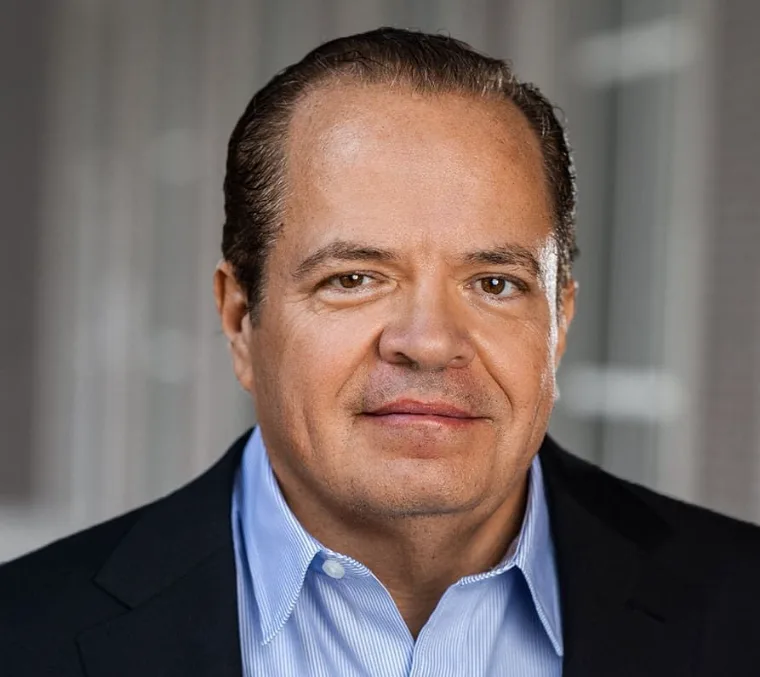
From writing code at 10 to leading 1,000 engineers, then the chairs they report to.
I started as an engineer. I was 10, in Galveston, Texas, reading books and teaching myself assembly because a kid in a movie had sat in front of a computer and built something with his mind. My first computer job was on the Pick operating system, where I built a way for people to send faxes from their desk; the year after, it was a $2 million business. I still build: I run two inference servers and an AI-powered house. If you started from code, the rest of this page is the path from there.
At Cox Automotive I was the VP of Engineering inside an 80-year-old enterprise, leading a cloud and DevOps transformation across more than 1,000 engineers: 10,000-plus servers moved to the cloud at 99.9% uptime, and the meeting with AWS that started the move. The job was not the technology. It was getting a thousand engineers, their managers and a business that had run one way for decades to change how they worked without stopping the business while they did it.
Before that I ran product and engineering together as EVP and GM at New Relic, growing a $300M business to $500M. I arrived after the previous leader was let go, when our largest customers said there had been no real innovation in nearly three years and the sales team had stopped believing engineering could deliver. We put one general manager over product and engineering with business metrics, set a quarterly plan with a named share of engineering capacity for roadmap, bugs and sales commitments, and ran a cross-company escalation meeting where any roadmap change had to be agreed by the leaders in the room. At the next customer advisory board the CTO of Disney and an SVP of Capital One told us we had delivered more in six months than in the three years before, and new products added $50M-plus in incremental ARR. I have written that operating rhythm up in aligning product and engineering for performance.
And before that I sat in the seat a VP of Engineering reports to: I founded Interland, the company that became Web.com, and took it from a startup to a Nasdaq IPO as CEO, with 650 people by the time we got there. Since then I have been COO of Blameless, which built a GenAI incident-response product used by Fortune 500 SRE teams, and Chief Product Officer at Coursedog, where we rebuilt the product and engineering organization in nine months on the way to an $80M acquisition. Every one of those rooms was an engineering leader being read by a CEO, a CPO and a board. I have sat on every side of that table.
From the enterprise I transformed, and a founder who watched the teams change.
“Ken led our $160M+ cloud, engineering, and DevOps modernization across a $3B+ portfolio. He brought clarity, velocity, and accountability to every initiative.”
“We worked together over 4 years across 2 companies. I've watched Ken boost the output of software teams, raise hiring standards, and transform behavior by example. Every conversation with Ken leaves you inspired.”
Engineering leaders whose scope grew faster than their authority.
VPs of Engineering, CTOs and the engineering leaders about to become one, usually in one of five places: the first VP of Engineering a company has ever had, hired or promoted into a seat nobody has defined; the director who is expanding the team beyond 20, then 50, then 150 engineers and has just added a layer of managers between themselves and the code; the VPE doing the CTO's work without the title, or the CTO deciding whether to hand the organization to a VPE; the technical founder handing engineering to its first real leader; and the enterprise VP of Engineering carrying a transformation through an organization that has run one way for decades.
If any of these are on your desk, this is the work: your scope doubled and the hours did not; you manage managers now and the team is slower than when you managed it yourself; the CEO expects AI to double your output and you cannot yet show what it did; you are still the person the incident pages; the CPO and you present two roadmaps to one board; and you are not sure whether the next seat is CTO, or whether you want it.
Why the VP of Engineering seat is hard to learn on the job.
The seat got wider without getting any more hours. In a 2025 survey of 617 engineering leaders, 65% reported an increase in scope and 40% took on more direct reports; 38% worked longer hours than the year before, 22% were at critical levels of burnout, and 40% said their team was less motivated than twelve months earlier.1
AI is in every conversation, and it amplifies whatever is already there. Across nearly 5,000 technology professionals, 90% use AI at work and more than 80% say it has raised their productivity, yet 30% report little or no trust in the code it writes, and adoption still correlates with lower delivery stability. The report's own line: AI does not fix a team; it amplifies what is already there.2
The business is watching engineering more closely than ever. In a 2026 survey of 636 engineering professionals, 84% said engineering productivity is a top management concern and 87% said engineering directly drives business growth.3 The VP of Engineering is the person expected to make both true at once.
The clock is shorter than it looks. Across the top 1,000 US companies by revenue, the average technology chief lasts 4.6 years in the seat, against 6.9 for the CEO.4 The habits that got you the job are not the ones that keep it.
The hard part is rarely the architecture. It is the managers between you and the code, the executives who read engineering through you, and the version of you the next size of the organization needs.
What coaching for a VP of Engineering works on.
The work is growing the leader as fast as the engineering organization.
Scaling the team through your managers
The move from managing engineers to leading through managers: choosing the first layer, delegating without losing the signal, and building the operating rhythm that lets delivery scale without you in every room. I led more than 1,000 engineers through their managers at Cox Automotive and a 450-person product and engineering organization at New Relic.
Being read by the CEO, the CPO and the board
Managing up and across: making the work visible to executives and learning to translate technical work into business impact: the roadmap the CEO can defend, the budget the CFO can read, the board slide that says what engineering bought. I presented to the New Relic board, ran its customer advisory board, and have sat in the CEO seat you report to.
Delivery without becoming the firefighter
Reducing firefighting without slowing delivery: incident load, the roadmap-versus-bugs-versus-sales allocation decided once a quarter instead of every Tuesday, and the escalation path that stops the business trading under the hood. 99.9% uptime across 10,000-plus servers at Cox; as COO of Blameless I ran a company whose product was incident response for Fortune 500 SRE teams.
A technology strategy the business can read
Cloud, platform, technical debt and the re-platform, written as an investment case with a payback rather than a list of engineering wants. I moved 10,000-plus servers to the cloud inside an enterprise and carried FedRAMP through at New Relic and Unqork, each of them argued to a CFO first.
AI pressure, measured
What to say when the CEO expects AI to double output: 90% of engineers already use it, 30% do not trust what it writes, and adoption is raising throughput while lowering stability. The work is the platform quality, workflow clarity and team alignment that make AI an amplifier of strengths instead of weaknesses, and a number you can stand behind. I have built and shipped AI products as a CEO and written about why AI transformation is a people problem, not a tech one.
VPE or CTO: the next seat, decided on purpose
The builder-to-executive gap, the VPE-versus-CTO question, and whether you want the seat above you or a bigger version of the one you hold. I have held VP of Engineering, CTO, CPO, COO and CEO seats, so we can talk about what each one actually asks of you before you find out the hard way.
Org design, restructuring and the acquisition
Redesigning the organization for the next size, restructuring without losing the people who hold it together, and engineering's part in a merger or an acquisition on either side. I rebuilt the product and engineering organization at Coursedog in nine months on the way to an $80M acquisition, and have been through 35 transactions and 18 exits.
How product and engineering stop pointing fingers: four moves.
At New Relic the problem was not talent. Sales, product and engineering each had their own view of what mattered, so major initiatives sat behind feature flags for months and the customers noticed before we did. The fix was an operating rhythm, and I wrote it up in aligning product and engineering for performance. For a VP of Engineering it comes down to four moves.
One owner over product and engineering, measured on business metrics. A general manager, or you and the CPO operating as one, accountable for outcomes rather than output, so the finger-pointing has nowhere to go.
A quarterly plan with a named share of capacity. Roadmap, bugs and sales commitments each get a percentage of engineering before the quarter starts. The argument happens once, in daylight, instead of every week in the backlog.
One escalation meeting for every roadmap change. Any change that moves a commitment is agreed by the leaders of the company in one room, so nobody trades the roadmap under the hood and everybody knows why it moved.
The customer as the scoreboard. A customer advisory board that tells you whether the last six months landed, and outcomes rather than activity on every OKR. At New Relic that scoreboard said we had delivered more in six months than in the three years before.
Under all four sits the frame I have used since my first company: the right formula, the right tactics, and repeatable actions.
Why a coach who has held the seats around yours.
A VP of Engineering sits between the managers who now hold the code, the CEO and CPO who read engineering through you, and a board that hears about engineering twice a year and remembers the outage. The hardest problems in the seat live in those relationships, not in the architecture.
Most executive coaches have been near the room. I was in the room, driving, at every scale your organization is heading for: a startup from zero to a Nasdaq IPO, growth at a public unicorn, New Relic from $300M to $500M, and transformation inside an 80-year-old enterprise at Cox Automotive with more than 1,000 engineers. I have held the CEO, COO, CPO and CTO seats at different companies, so I know the dynamics of each role around yours from the inside, and a decade as an investor and board member across 35 deals and 18 exits means I know how the board sees it. For an engineering leader, that is the point: you have to be read correctly by a CEO, a CPO and a board, and I have been all three.
I have held each of those chairs: founder and CEO through a Nasdaq IPO, EVP at New Relic, COO in a VC-backed turnaround, Chief Product Officer through an $80M acquisition, and a decade as a managing partner at a venture firm. I have sat on every side of the table, so I understand how the whole organization moves, not just the seat you are in.
I am also a certified coach, CEC and ICF certified since 2019, with a psychology degree. We can work on the operating plan and the person carrying it in the same hour.
Four steps, no mystery.
Discovery call. Forty-five minutes on video, no pitch: what is actually going on, and whether I am the right person for it.
Calibration. We agree what success looks like and how we will both know, before the work starts.
Standing calls. Weekly, every other week or monthly, on video or in person.
Access between calls. The hard things do not wait for the calendar. More on the approach on the executive coaching page, and on choosing any coach in six questions to ask.
The ones VPs of Engineering and CTOs actually ask.
What does a VP of Engineering coach do?
A VP of Engineering coach helps an engineering leader make the move from managing teams to operating at the executive level: organizational scale, business strategy and cross-functional influence. In practice that is four things. Executive alignment, translating technical reality into business outcomes for the CEO, the product leaders and the board. Organizational design, structuring the department, the leadership layers and multi-team delivery. Influence across peers in sales, finance and product where you have no authority. And operational scale: budgets, compensation, hiring and retention. It is not therapy and it is not consulting. The best ones have held the seat; I held it across more than 1,000 engineers.
Who is coaching for a VP of Engineering for, and who is it not for?
It is for the person accountable for an engineering organization at the executive level: a VP of Engineering, a CTO who runs the organization rather than the architecture, a head of engineering about to take the VP title, or a technical founder handing engineering to its first real leader. Usually the team has passed 20 engineers and has, or needs, a layer of managers. It is not for an engineering manager choosing between staying technical and managing; that is a different conversation, and I will tell you so on the first call.
VP of Engineering or CTO: what is the real difference, and should I become a CTO?
In most companies the CTO owns the technology direction and the outside story, and the VP of Engineering owns the organization and the delivery. In smaller companies one person does both, and many VPs of Engineering are doing the CTO's work without the title. The question worth coaching is not which title ranks higher but which job you want: the technology and the market, or the people and the machine that ships. I have held both seats, and the seats above them, so we can look at each from the inside before you decide.
What does a VP of Engineering do, and is it higher than Head of Engineering or Director?
A VP of Engineering leads the engineering function: the organization, the managers, delivery, hiring and the budget, and represents engineering on the executive team. It usually outranks a director, but the titles are not standard. A director of engineering typically leads several teams through managers; a VP of Engineering leads the function and sits on the executive team; head of engineering is used for either, most often at smaller companies where it is the top engineering job. What matters for coaching is the seat, not the word: if you are the person the CEO holds accountable for engineering, you are in the seat this page is about.
I am the first VP of Engineering my company has had. Where do I start?
With the definition of the job, because nobody has written it. Agree with the CEO what you own, what the CTO or CPO owns, and how engineering will be measured, in writing, in the first month. Then look at the layer between you and the code: which managers you have, which you need, and which decisions move from you to them. Most first-time VPs of Engineering try to keep doing the old job while learning the new one, and burn a year finding out that does not work.
How do I scale past the team I can manage myself?
By leading through managers, on purpose. That means choosing the first layer of managers for judgment rather than seniority, handing them real decisions and a real operating rhythm, and changing what you spend your time on: from the work to the system that produces the work. At Cox Automotive there were more than 1,000 engineers between me and the code; the only way that works is a rhythm the managers run and you inspect. We build that rhythm for your size.
How do I get the CEO and the board to read engineering correctly?
Speak in their units. Delivery becomes revenue protected or enabled, technical debt becomes an investment with a payback, an outage becomes a risk with a cost, headcount becomes capacity against commitments. Then give them one artifact they can trust: a quarterly plan with a named share of capacity, and a scoreboard that says whether it landed. I have been the CEO reading those slides and the executive presenting them, and the gap between the two is most of what we work on.
My CEO expects AI to double our output. What do I tell them?
The truth, with numbers. Nearly every engineer already uses AI, most say it helps, a third do not trust what it writes, and across thousands of teams adoption has raised throughput while lowering stability. AI amplifies the organization it lands in. So the honest plan is the platform quality, the workflow clarity and the review discipline that let the gain survive contact with production, and a measured number you can report a quarter later. That is a better conversation with a CEO than a promise, and I have been on both sides of it.
Coaching, mentoring or a peer community: which does a VP of Engineering need?
A peer community gives you people in the same seat and the comfort of shared problems. A mentor has held your job and describes what worked for them. Coaching is about the way you decide and lead today: private, with no stake in the result, and willing to push back where a mentor would nod. At the VP level most people need the hybrid: someone who has held the seat and will still make you do the thinking. That is how I work, and you can tell on the first call whether it fits.
Who is the best coach for a VP of Engineering?
The one who has actually operated at the executive level in engineering, at or above the scale you are managing, and who balances the business alignment with the people side. Google's own answer to that question says the same: prioritise former VPs of Engineering or CTOs over generic career coaches, match the scale, and look for the hybrid of coaching and hard-won advice. The AI engines add: someone who has held a senior technology or CEO seat, not just general coaching experience. Then a first call where they push back instead of agreeing, references from leaders in your seat, and a coaching credential as table stakes. I have held the seat across more than 1,000 engineers and the CEO seat above it, and I am ICF and CEC certified. The seven tests, with what to ask and what a good answer sounds like, are in my guide to how to find the best VP of Engineering coach.
What does coaching for a VP of Engineering cost, and who pays?
Most companies pay for it as leadership development, and a VP of Engineering is exactly the seat they pay it for; a peer community or a platform course costs less and does a different job. Published US ranges run $1,000 to $10,000 a month on retainer, and $800 to $3,500 an hour at the executive level; my cost guide breaks it down by level, with who usually pays and how I set fees: executive coaching costs. You get a scope and a number on the discovery call.
Do you work with engineering leaders outside Atlanta, and how often do we meet?
Yes. Standing calls weekly, every other week or monthly, on video with engineering leaders anywhere, with access between them when the incident does not wait, and in person when the engagement calls for it. I am based in Alpharetta, Georgia, and for years ran national roles from here while commuting weekly to the West Coast. We agree what success looks like before the work starts, in writing, so both of us can tell.
Start with a short note.
A short note is enough: where you sit, and what is on your desk. The team, the CEO, the roadmap, the next seat. I read every note myself. If you would rather talk, book a discovery call.
Or reach me directly:
(629) 304-8755
ken@kengavranovic.com
Where the numbers come from.
- LeadDev, The Engineering Leadership Report 2025 (617 engineering leaders and developers surveyed 14 to 27 March 2025)
- Google Cloud, DORA: State of AI-assisted Software Development 2025 (nearly 5,000 technology professionals), announced 23 September 2025
- Jellyfish, 2026 State of Engineering Management Report (636 engineering professionals, March 2026)
- Korn Ferry, Age and Tenure in the C-Suite (top 1,000 US companies by revenue), 21 January 2020