An IT director coach who has held the seats above yours: CTO, VP of Engineering, and the CEO they answer to.
I coach IT directors and senior technology leaders through the part of the job nobody trained you for: translating the technology into business outcomes, leading through your managers, the budget conversation, the transformation or AI mandate on your desk, and the step to VP or CIO.
I have held the seats your job reports into, as a former CTO, a former vice president of engineering and a former CEO. As Vice President of Engineering at Cox Automotive I ran a $250M budget, moved 10,000-plus servers to the cloud at 99.9 percent uptime, and drove DevOps across more than 1,000 engineers. At New Relic I was EVP and general manager, building for and selling to the IT organizations of 15,000-plus enterprise customers while revenue grew from $300M to $500M. And I founded Interland, the company that became Web.com, an infrastructure business at heart, and took it from a startup to a Nasdaq IPO.
So I coach from the chairs that decide an IT director's year: the CTO who sets the mandate, and the CEO who signs the budget. I have sat in both.
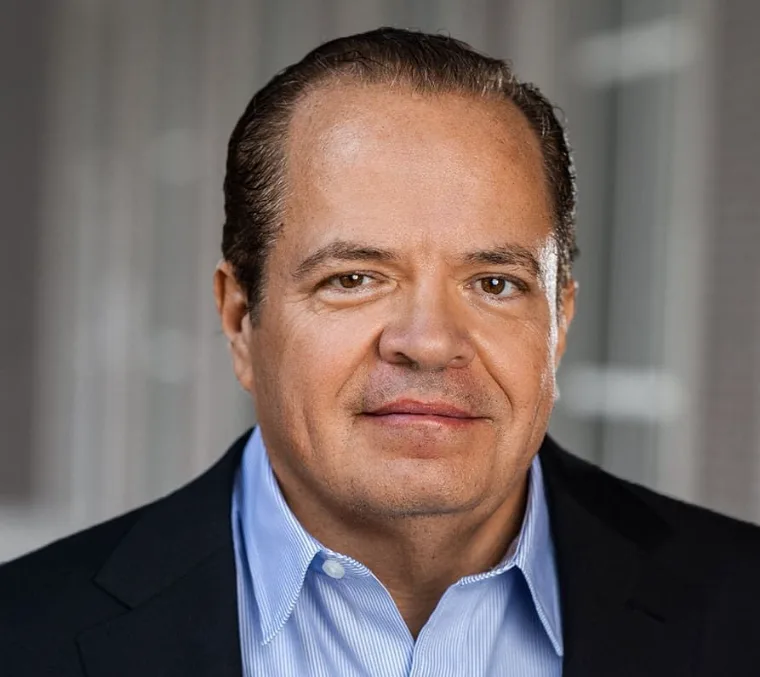
The seat IT directors report into: five years as VP of Engineering at Cox Automotive.
At Cox Automotive I was the vice president the engineering and technology directors reported into. Inside an 80-year-old enterprise, I ran a $250M budget and more than 1,000 engineers through a five-year cloud transformation that moved 10,000-plus servers at 99.9 percent uptime and cut recovery times 70 percent. It started in a meeting with Andy Jassy, then the CEO of AWS, that launched the company's move to the cloud.
Every one of those numbers was delivered by directors. I set their budgets, read their business cases, carried their outages into the executive meeting, and decided who got the next seat. I know what makes a director's case land with the person above them, because I was that person, and I know what it costs a director when it does not.
I started where most IT directors start: at the keyboard. I was ten, in Galveston, Texas, teaching myself assembly language from books. My first computer job was on the Pick operating system, where I built a system that let people send faxes from their own desks, and within a year it was a two million dollar business. I wrote software in New York and in Florida before I ran anything. The road from the code to the executive room can be learned, and it can be coached; I walked it, and I know where it gets steep. And the tech geek never left: I still build, with two inference servers at home and a house that runs on AI.
Before Cox I built a company whose whole product was infrastructure: Interland, the company that became Web.com, with 200,000-plus small businesses on the platform at 90 percent-plus retention, from a startup to a Nasdaq IPO. After it, at New Relic, I built for and sold to the IT organizations of 15,000-plus enterprise customers, and spoke at the Gartner IT Symposium, the conference where CIOs gather. That is the world an IT director's next step leads into: Foundry's 2026 State of the CIO study finds the CIO now leading digital transformation at 82% of companies, seen as a business leader by 46%, and reporting straight to the CEO at 40%, down from 48% a year earlier.1
From a chief data officer and a chief AI officer.
“Ken led our $160M+ cloud, engineering, and DevOps modernization across a $3B+ portfolio. He brought clarity, velocity, and accountability to every initiative.”
“Ken is one of the most effective technology leaders I have worked with. He sees the whole business and what needs to be done at the broadest level.”
IT directors whose job stopped being technical, and technology leaders one step from VP or CIO.
IT directors, directors of infrastructure, applications, security or data, senior IT managers stepping up, and the technology leaders one step from VP or CIO, usually inside a mid-size or enterprise company, reporting to a CIO, CTO or CFO. You were promoted because you were the best technical person in the room. Now the job is the people, the politics and the capital, and learning not to fix it yourself.
If any of these are on your desk, this is the work: you are transitioning into a new director role or preparing for a VP or CIO promotion; your biggest challenge is people management, strategy and influence, or burnout; you have to fix a team that is not working, or scale an infrastructure with the budget you have; you inherited a transformation, a cloud migration or an AI mandate; or your CIO or CTO was just replaced and you are the one holding the program.
Why the IT director seat is hard to learn on the job.
The job changes under you when you take it. 71% of leaders report significantly higher stress since stepping into their current role, and of more than 70,000 manager candidates assessed, only 19% showed strong delegation skills, the one habit the seat runs on.2
The workload is the stressor, and most of it is invisible upward. Among 7,726 technology professionals, heavy workloads (54%) and long hours (43%) top the list of work stressors; 83% say a mentor matters and 63% want one, but only 22% have one.3
The seat above you turns over. The average CIO stays 4.6 years, 3.9 in healthcare, so most IT directors will report to a new boss, with a new agenda, at least once before they are promoted.4
The mandate is now AI, and the skills are not there yet. 82% of IT leaders are tasked with evaluating AI additions to the stack.1 Among 2,015 technology leaders in 62 countries, 65% now sit on the executive committee, the share reporting an AI skills shortage jumped from 28% to 51% since the previous report, and only one in three reports a clear return on AI so far.5
The board is watching. 66% of public-company boards discuss technology at every meeting, and among the directors who do, only 34% feel confident their fellow board members understand what transformative technology means for the growth strategy.6 Somebody has to make it understood, and it is usually a director's deck that reaches them.
And nobody says so out loud. 15% of IT leaders describe themselves as burned out and another 33% report some burnout in the current role.7
The hard part is rarely the technology. It is the case you make for it, the people who deliver it, the politics around it, and the version of you the next seat needs.
What coaching for an IT director works on.
The work is growing the leader as fast as the mandate.
Translating the technology into the business case
Budget credibility under capital scrutiny: aligning the IT roadmap, the infrastructure and the architecture choices with the finance narrative and the board narrative, so the case for the migration, the security spend or the platform lands in the language the CFO and the CEO decide in. I built and defended the technology budget at Cox Automotive for five years; I know what the person across the table is listening for.
From the best technical person in the room to the leader of it
The identity shift generic coaching misses: you were the best technical person in the room, and that is no longer the job. Stepping back from the detail, and from being the technical hero every time a system goes down. Your value now is the capacity of the people you lead, not your own hands on the keyboard. I made that move myself, from writing assembly as a kid to the CTO and CEO seats, and at Cox every program I ran was delivered by directors who had made it too.
Leading through your managers
The move from managing tasks to coaching your own management team: delegation, the hard conversations, manager quality, and the 19% problem, which is that almost nobody arrives in the seat good at delegating. At Cox, every engineer I led delivered through directors and their managers; the operating rhythm that made that work is teachable.
Executive presence, and board updates that land
How to walk into the executive meeting, the steering committee or the board with a technology decision and leave with it approved: what to send three days before, how to run the room, and how to answer the question that is really being asked. I presented to the New Relic board with Benchmark at the table, and spoke at the Gartner IT Symposium.
The transformation, the cloud migration or the AI mandate on your desk
The program you inherited, six months in and stalling, or the AI mandate that arrived without a budget line. Ownership in the wrong place, accountability for activity instead of outcomes, decision rights never settled: the causes repeat, and the six checks for them are written up below. I ran the cloud migration at Cox and restarted a stalled product organization at New Relic; the method is in what I look for when a transformation stalls.
Politics, stakeholders, and the CIO or CTO above you
Multi-million-dollar transformation risk, executive-team friction, and the stakeholder dynamics a director lives inside: the CIO with four and a half years in the seat on average, the CFO who reads the line items, the business unit that wants it yesterday. Including the moment the boss above you is replaced and the program is suddenly yours. I have coached a VP of Technology through exactly that reboot; he ran it, and came out with a bigger mandate than he had before.
The step to VP or CIO
Preparing for the promotion: the scope you need to have owned, the executive relationships that decide it, the interview for the seat, and the first ninety days once you have it. I have made that call from the VP chair and from the CEO chair, and I know what the people making it are looking for.
Burnout, isolation, and the on-call life
Nearly half of IT leaders report some burnout and most hide it upward. This is the confidential room for it: the workload, the isolation of a seat that carries every outage, emotional regulation under sustained pressure, and the blind spots named out loud by someone who has sat where you sit and knows which parts of the weight are the job and which are you.
When the transformation stalls: six checks, five questions.
Most of what lands on an IT director's desk is a transformation someone else announced. The long form of this list, with the story of a company that attempted the same cloud migration three times, is in Your digital transformation stalled: here is what I look for. Written for the director who owns the delivery, it comes down to six checks and five questions.
Check who owns it. If your team is running a change that removes part of your own team's work, or depends on a group that reports to a different executive with a different target, the program has a built-in conflict. Say so early, to the person who can move the ownership.
Check what you are measured on. Servers migrated, tickets closed and sprints completed are activity. Ask for the business result in writing; without it, every review becomes an argument about whose plan slipped.
Check that the goal is a result, not a tactic. Cloud, a new ERP or an AI platform is a method. The program needs one sentence the CFO would sign: what it makes true, measured how, by when.
Check what your people have been told. Engineers and administrators whose jobs change will ask what it means for them before they ask anything else. If the answer is hard and unspoken, the work slows quietly and nobody ever says no.
Check who decides. Sequencing, what the legacy system gives up, and what counts as finished. Write the names down; two leaders who each think it is theirs produce a busy program that does not move.
Check that the executives are still deciding. Programs stall above the director more often than below: when the leadership team stops making the calls on outcome, funding and what gets switched off, and starts reading status reports. Your job is to bring them the decision, framed so they can make it.
The five questions for the first thirty days, asked of each executive alone: what is this for and how will we know; who owns it, and does it disrupt them; who decides; do our targets conflict; and would anything bad happen if we stopped. The answers tell you which check is failing before the steering committee does. Under all of it sits the frame I have used since my first company: the right formula, the right tactics, and repeatable actions.
Why a coach who has held the seats above yours.
An IT director sits between the engineers and administrators who run the systems and the executives who fund them: reporting to a CIO or CTO whose own seat turns over every four to five years, in front of a CFO who reads the budget line by line, and, more and more, in front of a board that discusses technology at every meeting. The hardest problems in the seat live in those relationships, not in the stack.
Most executive coaches have been near the room. I was in the room, driving, at every scale your company sits at: transformation inside an 80-year-old enterprise at Cox Automotive, growth at a public unicorn, New Relic from $300M to $500M, and a startup from zero to a Nasdaq IPO. I have held the CEO, COO, CPO and CTO seats at different companies, so I know the dynamics of each role above and around yours from the inside, and a decade as an investor and board member across 35 deals and 18 exits means I know how the board reads a technology decision. And because an IT director's case lives or dies with the person it lands on, it matters that I have been the enterprise technology buyer myself inside Cox Automotive, and the vendor selling into enterprise IT organizations at New Relic.
I have held each of those chairs: founder and CEO through a Nasdaq IPO, EVP at New Relic, COO in a VC-backed turnaround, Chief Product Officer through an $80M acquisition, and a decade as a managing partner at a venture firm. I have sat on every side of the table, so I understand how the whole organization moves, not just the seat you are in.
I am also a certified coach, CEC and ICF certified since 2019, with a psychology degree. We can work on the operating plan and the person carrying it in the same hour.
Four steps, no mystery.
Discovery call. Forty-five minutes on video, no pitch: what is actually going on, and whether I am the right person for it.
Calibration. We agree what success looks like and how we will both know, before the work starts.
Standing calls. Weekly, every other week or monthly, on video or in person.
Access between calls. The hard things do not wait for the calendar. More on the approach on the executive coaching page, and on choosing any coach in six questions to ask.
The ones IT leaders actually ask.
What does an IT director coach do?
An IT director coach is a confidential partner who helps a technology leader move from technical manager to strategic executive: translating the roadmap, the infrastructure and the architecture choices into the business case the CFO and the CEO decide in; navigating the politics, the stakeholders and the executive-team friction around a program; building people leadership so the managers under you run the work; preparing you for the VP or CIO step; and keeping you whole while you do it. The best ones have sat in the seats above yours. I have: CTO, VP of Engineering, and CEO.
Have you held the IT director seat yourself?
Not that title. I am a former CTO and a former vice president of engineering: I held the seats it reports into and the one it aims at: Vice President of Engineering at Cox Automotive, where the engineering and technology directors reported to me; the CTO seat; EVP at New Relic; and CEO of the infrastructure company I founded. I set directors' budgets, read their business cases and decided their promotions for years, which is the side of the table an IT director most needs to understand.
How is this different from general executive coaching?
A general executive coach works on presence, communication and career. That is table stakes here. What a technology executive coach adds is context: an IT director's problems arrive as a stalled migration, a security budget the CFO cut, an outage the board heard about, or an AI mandate with no headcount, and a coach who never carried a platform cannot tell the technology problem from the leadership one. I coach the leader, and I can read the roadmap, the debt strategy and the infrastructure plan while I do it.
Do I need a coach, a mentor or a consultant?
A consultant is hired to deliver an answer. A mentor has walked the road and describes it when asked; 83% of technology professionals say a mentor matters and only 22% have one, so if you can get one, get one. A coach is confidential, has no stake in your decision, and works on how you decide and lead this quarter, with enough operating experience to know what the decision feels like. The useful version for this seat is the hybrid: formal coaching training plus real time in senior technology seats.
Should I get a coach when I move into my first director role, or when I am preparing for VP or CIO?
Both are the right moment, for different work. In a first director role the work is the identity shift and the managers: 71% of leaders report significantly higher stress once they step into a new role, and the first ninety days set the pattern. Preparing for VP or CIO, the work is scope, executive relationships and the case you can make for the seat. The wrong moment is after visible trouble has started; the coaches who rank on this question say the same.
My biggest challenge is people management. Can coaching fix a team that is not working?
It can fix the part of it that runs through you, which is usually more than it looks. Manager quality, the hard conversations you have been postponing, unclear decision rights between two teams, and a director still doing the senior engineer's job are the four causes I see most. We work on the team through your management of it, in private, with the decisions written down.
How do I make the business case for a budget and get it through the CFO?
By starting from the business outcome and the risk of not doing it, not from the architecture. The case that lands names what the spend makes true, in a number, by a date; what breaks, and what it costs, if it is not funded; and the capability the company needs before it can accelerate. I ran the technology budget at Cox Automotive and sat on the approving side of many more. Most IT budget cases fail on the second sentence, and it is a coachable skill.
I inherited a transformation, or an AI mandate, that is already stalling. Where do we start?
With the six checks above, in that order, and the five questions in the first thirty days. Most stalls are not technical: ownership sits with the team the change disrupts, the outcome was never written down, or decision rights were never settled. An AI mandate is the same program with less budget and more attention; 82% of IT leaders are now tasked with evaluating AI additions to the stack, and the ones who get it funded are the ones who can say what it will make true.
My CIO or CTO was just replaced. What now?
First, understand that it is normal: the average CIO tenure is 4.6 years, so most directors report to a new boss at least once before they are promoted. Then treat the first ninety days under the new leader as a new job: learn what they were hired to change, show up with the honest state of your programs before they ask, and decide what you want from the reboot. I coached a VP of Technology through exactly this at a PE-backed company; instead of surviving it, he ran the transformation and came out with a bigger mandate.
What does a typical engagement look like, and how do I know it is working?
Standing calls weekly, every other week or monthly, on video or in person, with access between them when the outage or the reorganization does not wait; engagements usually last six months to a year. We agree what success looks like before the work starts, in writing. The early signs are a budget case that got through, managers who need you less, an executive meeting that went the way you planned it, and fewer nights on the keyboard.
Is this confidential, and can my company pay for it?
Yes, and usually yes. What you say stays between us; when the company pays, it gets attendance and a yes or no on progress, and the content stays yours, agreed in writing before the first session. Companies coach directors and above as a matter of course, and a technology leader inheriting a transformation is exactly the case they fund. If you need help asking, that is the first conversation.
How much does an IT director coach cost?
Published US ranges put coaching for directors at $300 to $600 an hour and $6,000 to $15,000 for a six-month program, with retainers from $1,000 to $10,000 a month across all levels; the full breakdown by level, who pays, and how I price are in my guide to what executive coaching costs. You get a scope and a number on the discovery call.
Who is the best IT director coach?
The one who has held the seats above yours, a former CIO, CTO or technology vice president rather than a generalist, who can read your roadmap while coaching you and prove both in one call. Google's own answer to this question and the guides that rank on it use the same test: specific experience in technology management, scaling engineering or IT operations, and the transition from tactical manager to strategic executive; operator experience in a senior technology seat rather than a generic career adviser; a credential from a body such as the ICF as table stakes; and a first call where they push back. The full set of tests is in my guide to how to find the best IT director coach.
Do you work with IT leaders outside Atlanta, and in person?
Yes to both. Standing calls run on video with technology leaders anywhere in the United States, and I work in person when the engagement calls for it. I am based in Alpharetta, Georgia, and for years ran national technology organizations from here while commuting weekly to the West Coast.
Start with a short note.
A short note is enough: where you sit, and what is on your desk. The budget, the migration, the boss who just changed, the promotion. I read every note myself. If you would rather talk, book a discovery call.
Or reach me directly:
(629) 304-8755
ken@kengavranovic.com
Where the numbers come from.
- Foundry, 2026 State of the CIO Study (25th annual; 662 heads of IT and 249 line-of-business respondents), 2026
- DDI, Global Leadership Forecast 2025 (10,796 leaders; 70,000-plus assessed manager candidates), April 2025
- ISACA, Tech Workplace and Culture 2025 (7,726 technology professionals), press release, 5 March 2025
- Korn Ferry, Age and Tenure in the C-Suite (the 1,000 largest U.S. companies by revenue), 21 January 2020
- Nash Squared / Harvey Nash, Digital Leadership Report 2025 (2,015 technology and digital leaders, 62 countries), May 2025
- NACD, 2024 Public Company Board Practices and Oversight Survey: Technology Oversight, 2024
- CIO.com (Foundry), IT leadership burnout: the hidden cost of executive stress, citing the 2025 State of the CIO, 2025